terça-feira, 31 de agosto de 2010

The Wild Cat !


After much consideration, MM resolved to show the world his secret weapon. And here we have it: MM's wild cat in action! The name of this cat is "Guilherme" (William), and as you can notice from this picture this guy is a real internet addict, always browsing for news and innovative supplements for cat food.


In here we have another cat (Miosótis), following with a keen eye all the moves made in the wargames table, waiting for an opportunity to "jump" MM's opponent!
Thanks for the pics MM !
PC

quarta-feira, 25 de agosto de 2010

A BT na Espimodel

A Brigada Tripeira vai ter a honra de estar presente na Esposição de Modelismo, ESPIMODEL, no dia 11 de Setembro da parte da tarde.

Será apresentado um pequeno cenário da WWII, cujo teatro de operações se situa no Norte da Europa junto à fronteira do "Reich", onde se confrontarão uma unidade de "Bifes" e um Kampfgroup Alemão reforçado com um pelotão de "Fallshimjager".
Será um cenário onde se demonstrará a dinâmica da infantaria num jogo da WWII, em contra corrente da generalidade de jogadores que habitualmente só utilizam viaturas blindadas neste período da história militar.
A escolha deste tipo de jogo em que a infantaria tem um papel primordial, só é possível com a utilização das regras AMBUSH BLITZ (neste caso com a opção da utilização da mesa de jogo convencional), que permitem uma fluidez de jogo com a utilização massiva de infantaria.
Conto com a vossa presença,
JF

domingo, 15 de agosto de 2010

Character Series nº 3 - Alcibiades

Character Series nº 3 - Alcibiades

(Part V)

Those that have the will and the good fortune to be able to follow this outstanding Series have surely noticed that last Friday's deadline is long overdue.

There is a simple explanation for this: Peixoto did not deliver my well deserved prize. In fact, he did not even bother to reply to my unselfish proposal. That's o.k. Peixoto, I do not hold this against you. I know you had temperatures of about 40º degrees in Coimbra these last few days, and a guy your age must be having trouble holding his brush, let alone paint his way around...

I am sick and tired of writing about this AL guy. It is time to finish him off.

(Alcibiades in Ionia)

By 411 B.C. AL was ready to pursue his personal agenda, and Sparta simply was not part of it. You remember (...) I mentioned in my last post that Tissaphernes was the representative of Darius II, of Persia - known to the Greeks at the time merely as the "Great King". As a Persian Satrap, Tissaphernes was the holder of considerable civil and military power, therefore, this was the guy AL needed to get on his side. A simple thing for a man like him.

His charming personality, combined with a new found taste for an opulent and luxurious lifestyle did it for him (his previous spartan way of life was quickly discarded). Tissaphernes was thoroughly impressed and agreed to follow AL's advices in matters related to the conduct of the war. At the time, Persia was more or less allied with the Peloponnesian League, since that option gave her a perfectly good excuse to nibble at the Athenian possessions in Ionia. The Persians had agreed to pay every expense related to the maintenance of the Peloponnesian fleet in Ionia, therefore giving them a considerable operational edge against the Athenian fleet.

AL would have none of that. He proposed that Persia started delaying the necessary payments, in order to cause instability in the Peloponnesian ranks, so that the war could be prolonged and result in the exhaustion of both opponents, allowing Persia to easily "pick up the pieces". This objective was easily achieved, since several riots immediately occurred, caused by the lack of payment of salaries and the availability of supplies. And AL started using his new found influence on Tissaphernes and Persia to achieve his personal objective: his return to Athens.

His influential friends in Athens and with the Athenian fleet, stationed in the island of Samos, combined with his usual intrigues and shallow plots did the trick. In 411 B.C. AL became once again a General on the Athenian payroll. I can only imagine his attitude if somebody asked him about his late friends, the Spartans. "Spartans, who?", would be a probable reply.

Never mind if this fact had contributed to the (temporary) overthrow of the democratic regime in Athens. After all, that was only a small thing, compared to AL's well-being. In 407 B.C. AL even received a spectacular hero's welcome on his return to Athens, following some military successes (namely, the battles of Abydos and Cyzicus).

But this was the beginning of the end for AL. The fickle Athenians did not accept the defeat of the Athenian forces in the battle of Notium (406 B.C.) and did away with AL, exiling him, never to return to fair Athens.

In 404 B.C. he was, naturally, assassinated (by Spartan influence, as some say).

What a Character, this guy! Woe to the people that let themselves be lead by guys like AL. However, examples such as this are recurrent in History. The instrumentalization of entire countries and societies to the will and ambitions of a person or a group, are recurrent. Just remember these words from Napoleon: "A man like me troubles himself little about the lives of a million men."

One would expect that after thousands of years, the human race could have learned something regarding this. However, not even today we can say that the learning has been made...

Ok. Now I have had enough writing about Statesmen and Generals, in this educative and marvelous Series. My next post will show you how a "John" like you and I can deal with getting involved in the business of war. And, once again, I know for a fact that there will be a (one man...) race to discover his name!

His first name starts with an "E" and his second name starts with an "J". JMM, this is your chance! The prize available to the winner will be announced...if we ever have a winner.

PC

sábado, 14 de agosto de 2010


24.º Campeonato Mundial de Tiro com Armas Históricas
Barcelos, dias 15 a 21 de Agosto de 2010

Aqui fica uma nota informativa relativa à realização de um evento singular em Portugal, supra indicado.
No dia 17 de Agosto, ao final da tarde, haverá elementos do GRHMA e da ANP a testar a solidez e resistência dos edifícios situados no centro histórico de Barcelos, designadamente às ondas de choque provocadas pelas nossas peças de artilharia.

Aqui ficam dois links onde podem ser encontradas mais informações:
PC

BATALHA DO VIMEIRO 21 Agosto 1808 - Diorama

BATALHA DO VIMEIRO 21 Agosto 1808

Realizada durante a I invasão, a batalha do Vimeiro foi decisiva para a rendição de Junot.

Apos o desembarque dos Ingleses na Figueira da Foz a 1 de Agosto de 1808, Junot foi ao encontro do exercito aliado, acabando por se envolver na Batalha no Vimeiro dia 21.

Durante o confronto foram várias as tentativas de Junot para destroçar a defesa Inglesa, no entanto a falta de reforços e a posição no terreno vantajosa a Wellesley acabou por ditar a derrota dos Françeses.


Com este resultado Junot acabou por pedir a rendição, terminava assim a I invasão das forças Napoleónicas em Portugal.

Diorama Dinâmico escala 1.72

Dimensões – 3.00/1.80 – 80 arvores

Total de Figuras:

Franceses : 763 Figuras

  • Homens : 622
  • Cavalos : 108
  • Artilharia : 19 canhões
  • Carroças: 14

Ingleses/Portugueses: 784 Figuras

  • Homens : 422
  • Cavalos : 80
  • Artilharia : 19 canhões
  • Carroças: 9 – Barcos: 2
  • Portugueses Homens: 163
  • Portugueses Artilharia: 3 canhões
  • Cavalos: 23 – Carroças: 2
  • Civis: 40 - Animais: 44

Fases da Batalha recriadas no Diorama

Fase 1 – Posição Inicial das forças Aliadas e Civis ao longo do terreno

Fase 2 – Chegada das Forças de Junot e observação do terreno em torno do Vimeiro

Fase 2 - Combates – Manobras de envolvimento ao cabeço central do Vimeiro

· Tentativa da tomada da colina várias fases

Fase 3 - Ataque dos Granadeiros de Kellermann

· Tentativa de entrada no Vimeiro – Igreja e Cemitério
· Retirada
Fase 4 - Combates de Cavalaria ao longo do Vimeiro
· Retirada das forças de Junot

Forças Militares na Manha de 21-8-1808 no Vimeiro
Ordem de Batalha Inglesa
21-Agosto 1808
General Wellesley
1º Brigada – Hill - 2658 Homens
2º Brigada – Ferguson - 2449 Homens
3º Brigada – Nightingale - 1520 Homens
4º Brigada – Bowes - 1813 Homens
5º Brigada – Craufurd - 1832 Homens
6º Brigada – Fane - 1903 Homens
7º Brigada – Anstruther - 2703 Homens
8º Brigada – Ackland - 1332 Homens
Artilharia - 18 Canhões 226 Artilheiros
Cavalaria de Taylor - 240 Cavaleiros
Destacamento Português de Trant
2585 Homens
Ordem de Batalha Francesa
21-Agosto 1808
General Junot
1º Divisão – Delabord
Brigada Brenier
Brigada Thomieres
2ª Divisão – Loison
Brigada Solignac
Brigada Charlot
8300 Homens Infantaria
Reserva de Kellermann
2100 Granadeiros
Cavalaria de Margaron - 1950 Cavaleiros
Artilharia de Taviel
23 Canhões 700 Artilheiros


Realizado por VM Mestre

http://batalhasnapoleonicas.blogspot.com/

terça-feira, 10 de agosto de 2010

Аванте ТОВАРИЩИ

Olá "camaradas"
Desta vez a cena decorre algures no sul da Rússia, com material britânico ao serviço da URSS.

As viaturas são Matilda MkII

Viaturas já montadas, com as escotilhas abertas feitas em plasticard


Já com o primário, tripulantes e tanques extra num dos tanques


A pintura base, verde escuro


Resultado final após pintura, wash, decalques e respectiva base com película magnética

De perfil

E mais uma placa da minha mesa de jogo

As viaturas são WGS e as figuras Pendraken.

Espero que gostem

JF

PS: Continuem atentos (stay tuned)

segunda-feira, 9 de agosto de 2010


Bicentenário do Cerco de Almeida e do Combate do Rio Côa

Dias 26 a 29 de Agosto de 2010

Pois é meus amigos, é preciso começar a preparar tudo com a máxima antecedência, de molde a poderem estar todos presentes e assistir a este memorável evento que será a comemoração do Bicentenário do Cerco de Almeida e do Combate do Rio Côa.
Esta será, sem qualquer dúvida, a maior reconstituição histórica alusiva ao período napoleónico jamais feita em Portugal, suplantando mesmo o evento realizado no Porto, em Maio de 2009. Contamos com a presença de mais de 500 recriadores históricos vindos de toda a Europa, com inúmeros cavaleiros e peças de artilharia, além dos inevitáveis soldados de infantaria.
Desde o ano de 2004 que muitas pessoas e entidades (públicas e privadas) vêm trabalhando na preparação deste evento, colocando Almeida não só no mapa das reconstituições históricas ao nível europeu, como também divulgando este aspecto importante do nosso património histórico-militar, a nível local e nacional.
E os bravos soldados do Grupo de Recriação Histórica do Município de Almeida (GRHMA) e da Associação Napoleónica Portuguesa (ANP) não deixarão de estar na primeira linha em todos os (pacíficos) combates que se avizinham!
Por isso, toca a fazer as malas e a preparar o farnel!


PC


quinta-feira, 5 de agosto de 2010


Character Series nº 3 - Alcibiades

(Part IV)

Mais uma volta, mais cinquenta paus!
I could translate this into english, in order to allow the dissemination of a profound portuguese proverb throughout the world.
However, I will not do it. The most probable justification for this could be just plain laziness. But it is not. I am offering a substancial cultural prize to the fortunate guy that guesses it's meaning. The only guy that cannot apply to this is JMM - this guy seems to always find a way to win every available prize...

By the way: did you notice that I fulfilled this week's deadline, this time? It's the second time in a row!
Peixoto: I think this achievement is also deserving of a prize, don't you? Something related to painting 15 mm figures, maybe...?

Well, enough of small talk. AL's story must go on!

(Alcibiades in Sparta)

As I mentioned in my last post, at a given point of the Peloponnesian War the Athenians had enough of this guy and proposed to, in plain terms, cut his life short. Sensing he could not talk his way out of this, AL went ot Sparta and asked for protection against his former countrymen (from 415 to 412 B.C.).
And I say "former" with good reason, since immediately after arriving there AL took all the traits of a true Spartan citizen. Those of you that are curious about such things can compare the speeches Thucydides atributes to AL against the Spartans (while he was in favour in Athens) with those against Athens (while he was in favour in Sparta) - they are a real treat!

AL is (among other things...) a perfectly good example of how valuable the art of rhetoric can be.

Remember I said AL, while in Athens, lived the life of a bon vivant ?
Well, all of that was forgotten the minute he set his foot in Sparta. No more dragging of his purple died cloak (the equivalent nowadays of using a mink coat for the same purpose) through the streets, as he did in Athens, since that would be fatal while living with the frugal Spartans.
He started practicing the same physical exercices and calisthenics the Spartans did; he washed himself in the (very cold...) rivers, as the Spartans did and he even ate the same (awful) food.

Meanwhile, he even found time to get one of the Spartans King's wife (named Tímaea or Timaia) pregnant with his son. Those guys had two Kings and the lucky one was Agis II. Remember I said the Spartans would be sorry to welcome him...
By the way, in Sparta the women were also tough customers. They not only had a liberty and autonomy unheard of to women in the rest of Greece at the time, but were also taught to read and write. On top of it, they were allowed and even incentivated to practice several sports.
On the other hand, their husbands could only "visit" them by night, and even then in the most stealthy way possible, since they lived and slept (...) with their messmates and matrimonial visits were considered bad for military discipline. However, Spartan women were not deterred by that. Whenever their husbands did not have the appetite or will to be "stealthy" on a regular basis, they usually found someone that would - and this was a socially accepted thing.
I guess Agis II was not doing his duty properly...

AL also played a crucial role as military adviser to the Spartans in the war against Athens, instructing them on how to defeat the Athenians. His advices contributed to the defeat of the Athenians in Sicily - By 413 B.C. the Athenian fleet and army sent there were thoroughly defeated. In mainland Greece/Helas, his advice, among others, to conquer and fortify Decelea (a region in Attica, near Athens, with high strategical importance) also played a significant part in weakening the Athenian power.

But there is more.

This guy also proposed another important and useful war expedient to the Spartans - to promote the revolt from the Athenian Empire of the Greek cities of Ionia (Asia Minor). As you all know (another instance of wishful thinking on my part...) the Athenian Empire extended throughout the regions and cities that bordered the Aegean Sea, who supplied Athens with food, money and all sorts of men and material crucial for the war effort - as AL very well knew.
Therefore, he proposed that a Spartan fleet should be sent there for the purpose of promoting the rebellion of those cities.
And who do you guess he suggested should be appointed as leader of that expedition? Right on!
At that time (about 412 B.C.) ) Tissaphernes was the Satrap of Lidia and Caria (the regions where AL suggested the initial effort should be made) in Asia Minor, and leader of the Persian army extant there. This guy was a good match for AL. Well, at least he (Tissaphernes) survived AL.

And our boy AL by this time was just about ripe for another twist in his allegiances.

If Peixoto delivers my well deserved prize, you will know more about it next Friday.

PC


quarta-feira, 4 de agosto de 2010

Schnell, Schnell

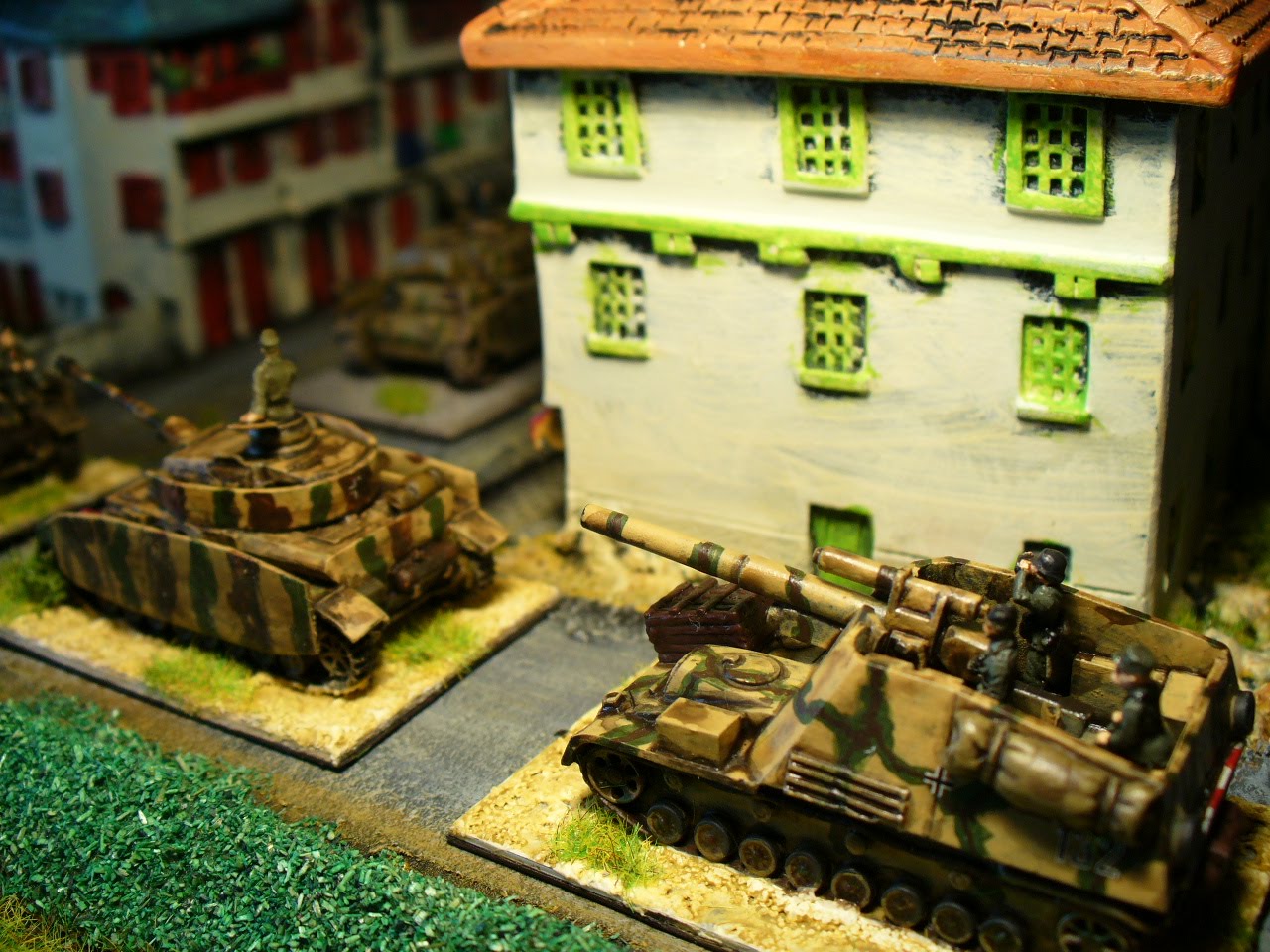
A pedido de muitas famílias, aqui vão mais umas fotos de alguns dos novos modelos construídos e de mais uma das placas do terreno de jogo em construção!


Abraço
JF


AFV and guns WGS
Figures, WGS and Pendraken

segunda-feira, 2 de agosto de 2010

Os "Bifes" na Europa - The "Brits" in Europe

Boas camaradas.
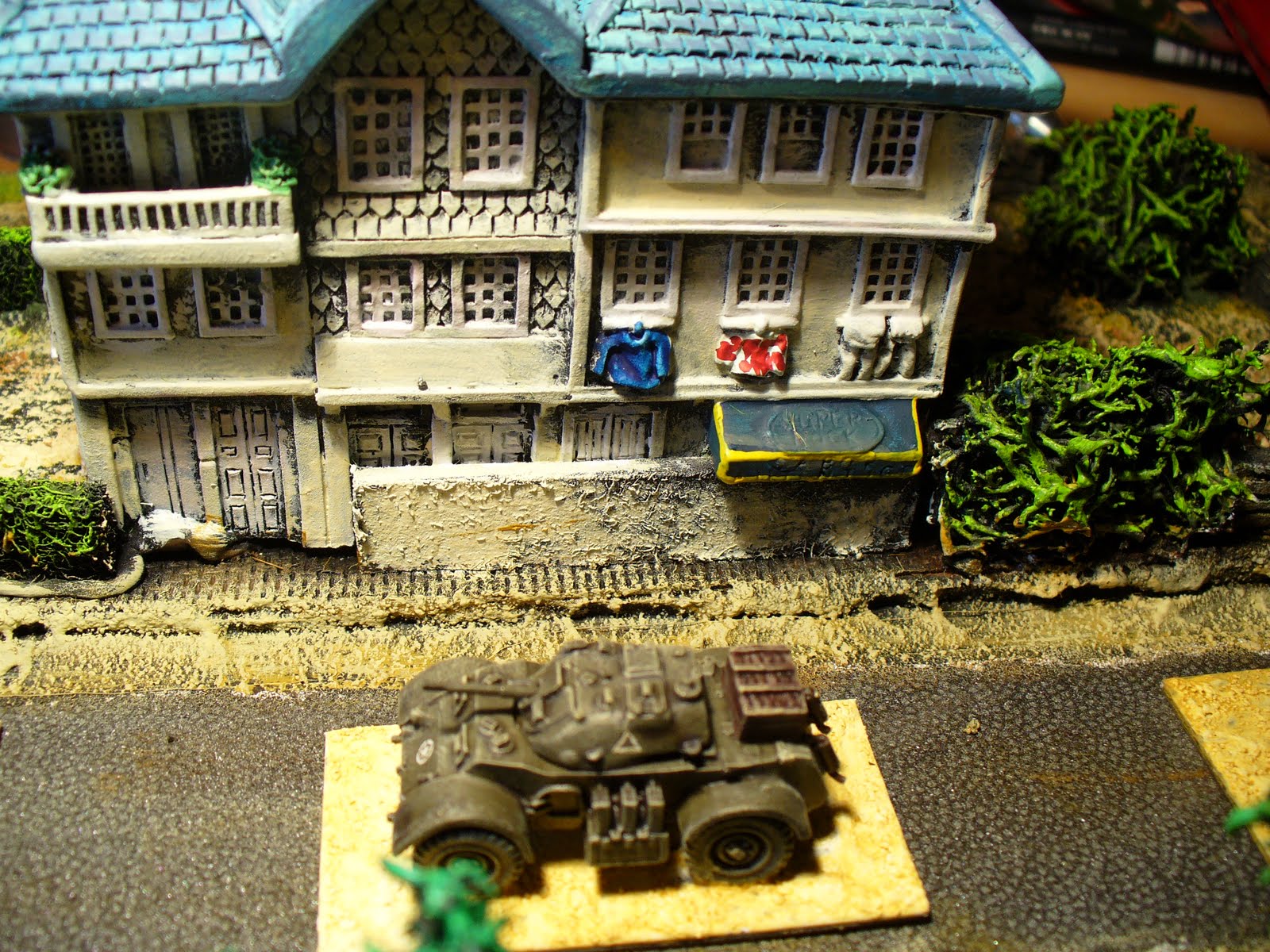
Mais umas fotos para acrescentar à minha colecção de modelos da WGS.
O cenário pertence à minha nova mesa de jogo, com estruturas paisagísticas pré-definidas.

Estou a preparar novos modelos para fotografar, cujas características serão um pouco mais originais, já que decidi adaptar uma nova filosofia na composição de cada modelo, de forma a apresentar uma nova dinâmica, acrescentando vários elementos, como figuras e diverso material cénico.

Espero que gostem,
Abraço


Staghound AC

Other view from a Comet Tank and Staghound AC

All models are WGS
JF

sexta-feira, 30 de julho de 2010


Character Series nº 3 - Alcibiades

(Part III)

The good news: I have a perfectly good excuse for missing the last two deadlines for posting this wonderful and well researched historic text - I was enjoying a vacation in a land "Far-Far-Away-From-The-Office" (and it is only in my office that I can find inspiration for doing this, and a good reason for doing no work at all).
The bad news: The vacation is over.

Now that I got this out of my system, I can proceed with the story of good old AL.

(The Sicilian Expedition)

Those of you that bothered to read my last post noticed that at some point in the Peloponnesian War, AL managed to get himself a nomination as military commander of the Athenian forces. And together with Nicias and Lamachus, our boy AL was one of the leaders of that strange military endeavour known as the Sicilian Expedition, which took place between 415 and 413 BC.
As always, Thucydides gives us a very interesting insight of the motivations behind this endeavour, and how at that time (as nowadays) men usually manage to use reason and logical arguments to justify the elimination of the dangers inherent to a course of action they most prefer and resort to the most absurd and illogical considerations to justify their preferences.
This was precisely the case, regarding the Sicilian Expedition, where the Athenian Empire made full use of its resources and allies to organize a magnificent and well equipped fleet and army (the largest ever organized by a Greek city state), in what (in their mind) promised to be a military promenade to distant Sicily, without due regard to the numerous and powerful enemies they still had right in their backdoor - The Spartans and their allies.

And AL played his part in justifying this adventure.

As usual in such cases, his motivations where - without a doubt - purely selfish. This guy was used to a lavish and luxurious life style, and that particular expedition promised to become a fountain of gold and silver - for him. Once a guy starts reading about historic events related to war, mostly, if not always, there is this common denomination: there is always someone set to make a huge profit from war, without the minimum regard to the pain and sufferings caused by it to thousands or even millions of human beings.
And, also almost invariably, this objective is disguised under patriotic, religious or other "political correct" motives, that help motivate the masses to the slaughter.
It so happens that in this case AL's objectives were frustrated - by his own doing. Just before the expedition started, someone thought it would be fun to decapitate the Hermai (plural) extant in Athens. The Herma (singular) were stone sculptures with a human head above a plain squared lower section, that also had male genitals carved at the appropriate height. These sculptures had a significant religious and social meaning in Athens at the time and the decapitation performed on the lower head (...) of the sculptures caused much consternation.
This (together with another episode called the violation of the Eleusinian Mysteries, also imputed to AL) caused some serious uproar at the time and, in my opinion, this is also just the sort of thing that good old Al would do just for fun, while on a drunken rampage - although he denied it at the time. Just remember the facts (I only mentioned some) you read about AL in my first post, regarding his idea of fun.
Well, since AL had the full support of the fleet/army at the time, his enemies in Athens did not manage to prevent him from setting sail to Sicily. But they started his public trial just after the departure of the military forces and AL was convicted in absentia and sentenced to death. A special trireme was sent after the fleet to find him and bring him back to Athens to face his fate.
However, AL was not a man that was ready to face a fate he could not influence. Therefore he got the "Hell out of Dodge", before anyone could catch him.
Can you guess where he went and hide ? To Sparta!
And the strange thing is that they welcomed him!
Once again, in time those poor Spartans would have serious reasons to regret that merciful act.
I will tell you all about it...one of these days.
PC


quinta-feira, 15 de julho de 2010

Wellington in Defence 1810 - Publicação

Para deleite de alguns camaradas da Brigada Tripeira, aqui fica a informação relativa à publicação de uma obra repleta de imagens, cujo tema é a Batalha do Buçaco, ou do "Bussaco".

Pode ser adquirido em: http://www.caliverbooks.com/

Aqui fica a informação do editor.

Wellington in Defence 1810
Bussaco and the Lines of Torres Vedras
Charles S Grant
ISBN: 978-1-85818-605-4
160 pages, well illustrated
248mm x 168mm
Hardback
£25.00

As Wellington’s victorious army retired from Talavera towards the Portuguese border and into winter quarters in late 1809, news reached Wellington that the French war with Austria was over. The obvious conclusion was that the Emperor could once more turn his attention and his armies to the Peninsula next year. A third invasion of Portugal by France could be anticipated in 1810.

Now we see Wellington not just as a great tactical commander but as a strategist of the first order. Anticipating the French invasion, Wellington sent a memorandum to Colonel Fletcher, his Engineer officer, giving instruction in great secrecy for the construction of a series of defences that were to become known as the Lines of Torres Vedras.

Wellington in Defence – 1810 describes the defence of Portugal against Massena, the Light Division’s action at the Coa Bridge, the battle of Bussaco and the formidable Lines of Torres Vedras which brought the French invasion to a halt. As with previous books in the series, much of the story is told through extracts from firsthand accounts.

The uniforms of the British and French armies are covered in details and in this volume special attention has been paid to the Portuguese Army. Bob Marrion has provided more than 40 new illustrations to bring the uniforms, both regulation and campaign dress, to life.

Wellington in Defence – 1810 continues this series on Wellington’s campaigns, marking the 200th Anniversary of both Bussaco and Torres Vedras.

PS: Por uma questão de curiosidade e como prova de que esta batalha foi importante, vejam a moeda em prata comemorativa e editada na República de Palau.

Imagem

sexta-feira, 9 de julho de 2010


Character Series nº 3 - Alcibiades

(Part II)


And here we are folks, the dream you have all been dreaming of: a chance to read another fantastic post in this wonderful Series!
Maybe some of you thought I had forgotten all about this gig; that I was lazy; that I did not deserve to write this kind of nonsense in this most elevated and cultured web space... Well, I hope I am wrong about these thoughts of yours, otherwise you guys will be getting into serious trouble with me. In extremis, I might even ask  MM to let his wild cat loose on you!
By the way: MM, when are we getting more pics of your cat? At least we can see all his details clearly - I cannot say the same about most of your 1/300 models paint jobs ;-)

Enough about trivial matters. AL's story is waiting to be told!

I will be mentioning a few facts in this post that can only be understood if you already know something about that momentum event that took place in the V century B.C.: The Peloponnesian War (431-404)! For those of you that do not know anything about it, this would be a good time to start. On the other hand, you can do as JF usually does: ignore this history investigation thing, and continue reading.

By 425 B.C. Athens had the upper hand, in the war being waged by the Athenian Empire against the Peloponnesian League, led by Sparta. As you all know (this is wishful thinking...) Sparta and her allies were more numerous and powerful in land forces. The skill and prowess of the Spartan hoplites was already well established. The Athenian edge lay on the sea. Her fleet was huge and her sailors were among the best in the ancient world. In 425 B.C. Athens managed to secure a foothold in Spartan territory, more precisely in the peninsula of Pylos, in the province of Messenia (south-western Peloponnesus). The Pylos campaign (battles of Pylos and Sphacteria) brought Athens numerous advantages, in military and moral terms. They not only defeated and captured large numbers of Spartan (about 400) hoplites, but also created a focus for the defection of the helots (a large population enslaved by Sparta). These factors contributed to depress the fighting spirit of the Spartans, and combined with a few others made them do the unthinkable at the start of the war: sue for peace.
With this in mind, a delegation from Sparta arrived in Athens, claiming to have full powers to negotiate a peace treaty. Well, our boy AL was against any kind of peace, since it could only drastically reduce his unlimited political and personal ambitions.
Therefore, AL persuaded the Spartan delegates to deny in the presence of the Assembly of the Athenian people, sheduled to convene to appreciate the peace proposal, that  they had full plenipotentiary powers to negotiate. He also claimed that, by doing so, he would be in the position to obtain the favour of the Athenians in order to conclude a peace treaty in very favourable terms to Sparta.
Well, those poor delegates believed him.
In the day of the Assembly, the Spartan delegates denied having plenipotentiary powers, in reply to a question made by AL himself. Imediatly after that, AL went on a rampage, publicly calling the delegates untrustworthy liars, because they dared appear before the Athenian people to negotiate a peace treaty, without having full powers to that effect.
Very nice, huh? 
With the Spartan delegates thoroughly humiliated and the Athenians full of confidence in victory, peace became a forlorn hope.

Well, with whom do you think some guys in politics nowadays learned to say one thing and do precisely the opposite? With good old AL, of course!

This way Athens lost a golden opportunity to negotiate a very favourable peace treaty, while on the upper hand. A similar opportunity would not appear in this war, with gruesome consequences to the Athenian Empire.
But AL got what he wanted: public recognition as defender of the State interests and a nomination as military commander. And he set about promoting and organizing what would prove to be another cataclysmic event to Athens - The Sicilian Expedition.

Hopefully, you will know more about in in my next post.
PC

domingo, 27 de junho de 2010

1:300 FIGURE BASING TECHNIQUES - Last Part

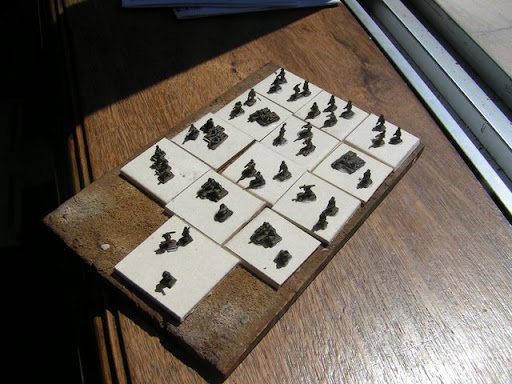
Next details. Gas mask cannisters, boots, other equiment, wooden weapon parts with some brown, entrenching tools handles in a light wood (yes, you can see them!) then weapon barrels and the MGs using a mixture of black with dark grey. I don't like pure black as too harsh for me.

Finally faces and hands. I used a Vallejo dark flesh, and I was careful not to splodge it around too much. Faces are a problem, just a little quick dab to avoid spreading paint over chest and shoulders which is the commonest error. In this case better too little than too much. Hands are easier, you only need a little dab over the gun.

After these were finished time to paint the helmets, carefully not to go over the face, but of course overpainting any excess face over the helmet .

At the end I painted the individual figures base stubs they come with with the colour I intend to use as undercolour for the bases, in this case a dark umber, and finally a final coat of very diluted wash, and they're ready for basing.

Some random notes:

These H&R figures come in strips of about 10 per strip, and you have the choice of cutting them up as individual figures or you can leave them all together. I like to spread them apart to have wider brush space.

Remember you are not painting individual figures, you're painting armies and you have to use a mass technique. Of course you can come around later and give your command figures a little more detail if you want.

A thing I forgot was that Panzerschrecke, heavy MG tripods and the mortar barrel and legs were painted German Dark Yellow before the final dark wash.

Also before basing I still want to give gun barrels a light drybrush with Gun Metal, and machine gun ammo belts will have a suggestion of Brass.

Those wooden strips are in this case a 2m length of 10x5mm strips I bought in a DIY shop for €2, which I sawed into 20cm lengths so I have a nice supply now.

A good idea is always to have various strips in several stages of finish so if one group is drying or curing you can work in another group.

Now back to work. I cut another number of 25mm sq. bases for my first Pz Grenadier battalion, and one 30mm sq. for the Batt. HQ.

With the tanks what I did was coat the base with PVA glue and cover them in sand, painted and drybrushed, and glued the vehicles on the almost complete bases. With the infantry I did the opposite. As the figures themselves have their small stands, if I stuck them on the prepared bases they'd look like they were floating over the texture, so I glued them to the bases and applied the glue & sand afterwards.

What I did was to apply the glue with the bottle nozzle directly on the base surface taking care to avoid smearing the little figures, and working bald spots in with a toothpick. Then into a tub with sand the bases went, one by one as each had the glue applied. Next steps will be painting / drybrushing.

So here they are in their entire miniature glory. I used two grades of 'vegetation', the second one somewhat fluffier. With all this greenery they look like 'maquisards'

The vehicle in the HQ stand here is provisional only, it hasn't undergone the Full Monty treatment yet.

I had used two grades of sand, and within the coarser sand bag I was lucky to find this small rounded pebble with a flat face which was just perfect to be uses 'as is' for a rock outcrop

Now that I have 2 Pz battalions and 1 inf battalion it's time to turn to the Soviets. Will come back later!

By Miguel Morão

sexta-feira, 25 de junho de 2010


Waterloo 2010

Finalmente, os Portugueses chegaram à batalha de Waterloo! Como todos sabem, no início da guerra da Sétima Coligação contra a França (também apelidada de Campanha dos Cem Dias), Wellington pediu ao Governo Português o envio de 30.000 soldados para auxiliar o exército Britânico nos combates que se avizinhavam, na sequência do regresso do Imperador Napoleão I da ilha de Elba, onde se encontrava exilado (chegado a Paris em 20 de Março de 1815). Porém, dilações de vária ordem obstaram à presença das nossas tropas nessa memorável batalha, ocorrida no dia 18 de Junho de 1815.
Todavia, essa falha foi finalmente colmatada este ano! Este ano 22 elementos do Grupo de Recriação Histórica do Munícipio de Almeida (GRHMA) e da Associação Napoleónica Portuguesa marcaram presença neste memorável evento, que contou com a presença de cerca de 3.000 recriadores de toda a Europa, com cerca de 250 cavaleiros e 50 peças de artilharia.


Como qualquer exército que se preza, levamos literalmente a casa às costas e ficamos (des)confortavelmente instalados em um dos três acampamentos históricos existentes no local. As nossas tendas ficaram montadas no acampamento do exército aliado, situado na Quinta de Hougoumont, em pleno campo de batalha original. Havia ainda o acampamento do exército imperial Francês e o acampamento da Guarda Imperial Francesa. Ou seja, havia literalmente milhares de homens e mulheres a viver um dia-a-dia em tudo idêntico ao de soldados do século XIX.


No nosso acampamento procuramos nunca lesar o rigor histórico.  Os utensílios de cozinha eram todos de época: pratos e copos em metal ou madeira; panelas de ferro e caldeiros em metal, para cozinhar.

Todas as nossas refeições quentes foram confeccionadas à fogueira e tudo correu surpreendentemente bem. As refeições foram confeccionadas a horas e sairam, além de abundantes, muitos saborosas.
O melhor da festa foi, sem dúvida, a camaradagem e o espírito de entreajuda criado entre todos os elementos do nosso grupo.


O pior da festa foi viver em tendas durante alguns dias, ao sabor do maravilhoso tempo existente na Bélgica. Frio e chuva q.b. foi o que tivemos TODOS os dias. A palha espalhada no "chão" das tendas ajudava a isolar um pouco o frio que "subia" da relva, mas pouco mais do que isso.
Anoitecia por volta das 22.30 horas e amanhecia por volta das 04.00 horas da manhã - foi o horário por que me regulei todos os dias lá passados.
Para ir às casas de banho (colectivas)  tinhamos de sair das tendas e andar cerca de 500 metros. Os duches também eram engraçados, porque inexistentes. O banho era tomado ou com toalhitos ou nos caldeiros de água - ao natural.

E, perguntam vocês espantados, porque raio foram estes tipos dispor-se a passar tais incómodos ?

Foi por causa disto, meus amigos!


Ou seja, foi para participarmos numa reconstituição de uma das maiores batalhas de todos os tempos, juntamente com milhares de homens e mulheres, onde deu para ficar com uma ideia muito aproximada da realidade histórica.
Para qualquer pessoa que tenha um mínimo de interesse pela reconstituição histórica do período napoleónico, este evento é de passagem obrigatória.
Eu pessoalmente já tinha estado num evento semelhante, em termos de magnitude - a reconstituição (Bicentenário) da batalha de Austerlitz, ocorrida em Dezembro de 2005, na República Checa.
Todavia, este evento foi sem dúvida melhor, não só porque o terreno não estava coberto de neve (como em Austerlitz), como também porque não havia nevoeiro impeditivo de visualizar toda a extensão do campo de batalha e a fantástica progessão e disparos das linhas de infantaria, de artilharia e  as cargas de cavalaria.

Foi a primeira vez que os organizadores Belgas tiveram um contigente Português a participar no evento e fiquei com a impressão que a nossa presença e participação foi apreciada.
Tivemos um precalço no que respeita à pólvora, pois utilizamos toda a que nos tinha sido distribuída para a batalha de Sábado e ficamos sem munições para a batalha principal, que iria ocorrer no Domingo de manhã, uma vez que não tinhamos percebido que não haveria segunda distribuição de pólvora para esse efeito. Pois bem, a organização compreendeu o facto e entregou-nos mais munições. Além disso, elementos de outros grupos de artilharia também nos cederam alguma pólvora e acabamos por ter munições mais do que suficientes para a segunda batalha!

Deixo-vos aqui vários links, onde podem visualizar imagens do evento.


PC